
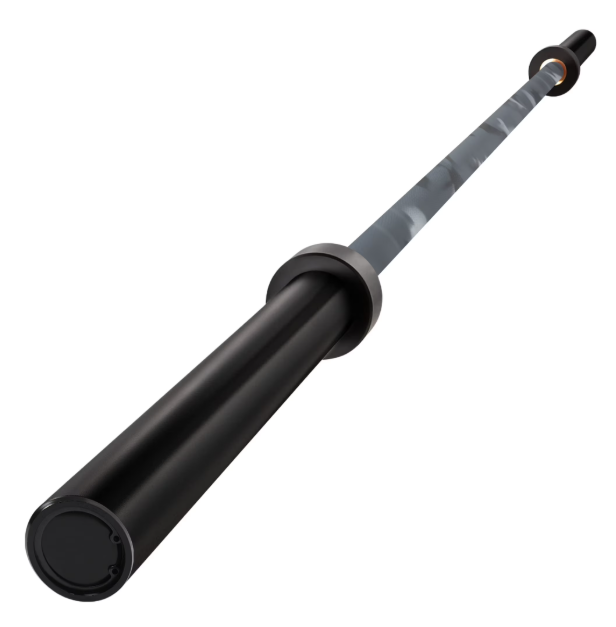
An Olympic barbell is a professional-grade strength training tool designed for heavy lifting, powerlifting, Olympic weightlifting, CrossFit training, and advanced resistance workouts. Recognized as a foundational piece of gym equipment, the Olympic barbell is engineered to support high-performance training while providing durability, balance, and superior load capacity.
Unlike standard barbells, Olympic barbells are manufactured according to international specifications. Most Olympic bars measure approximately 2.2 meters in length and weigh 20 kilograms for men’s competition bars or 15 kilograms for women’s versions. The sleeves are designed to fit Olympic weight plates with a 50 mm center hole, ensuring compatibility with commercial gym equipment worldwide.
One of the defining features of an Olympic barbell is its rotating sleeve system. High-quality bars use needle bearings or bushings that allow smooth sleeve rotation during explosive lifts such as cleans, snatches, and jerks. This rotation reduces wrist stress and improves lifting efficiency, making the bar ideal for dynamic athletic movements.
Olympic barbells are commonly made from hardened steel with finishes such as chrome, zinc, stainless steel, or Cerakote coating for corrosion resistance and long-term durability. Knurling patterns on the shaft provide enhanced grip and control during lifts. Many bars also include center knurling for additional stability during back squats.
This versatile training tool supports a wide range of exercises including squats, deadlifts, bench presses, overhead presses, rows, lunges, power cleans, and snatches. Because it accommodates heavy loads, the Olympic barbell is essential for athletes aiming to build strength, muscle mass, explosiveness, and overall athletic performance.
Olympic barbells are widely used in commercial gyms, home gyms, professional sports facilities, and rehabilitation centers. Beginners can use lighter weights to develop proper technique, while advanced lifters can progressively increase resistance to achieve elite-level performance.
One major benefit of Olympic barbells is their ability to promote compound movement training. Compound exercises engage multiple muscle groups simultaneously, improving functional strength, coordination, balance, and calorie expenditure. This makes barbell training highly effective for both athletic conditioning and body composition improvement.
Durability is another important advantage. Premium Olympic bars are tested for tensile strength and maximum weight capacity to withstand years of intense training. Many bars can support loads exceeding 700 pounds, making them suitable for professional-level lifting.
In addition to performance, Olympic barbells help athletes improve mobility, posture, and neuromuscular coordination. Full-body lifting movements challenge stabilizing muscles and encourage proper movement mechanics. This contributes to better sports performance and injury prevention.
Modern Olympic barbells are available in various styles tailored to specific training methods. Powerlifting bars prioritize stiffness and aggressive knurling, while weightlifting bars emphasize whip and sleeve rotation. Multi-purpose bars combine both features for versatile training applications.
Whether used for competitive lifting, general strength training, CrossFit, or muscle building, the Olympic barbell remains one of the most effective and respected fitness tools in the world. Its combination of durability, versatility, and performance makes it a core component of nearly every serious training environment.
| Chrome,Black Oxide | 1 |
|---|---|
| 700 lbs,1000 lbs,1500 lbs | 1 |
Be the first to review “Olympic Barbell 7ft 45 lbs”
Related products
Reviews
There are no reviews yet.